
Essay
What Makes a Great LinkedIn Headshot?
Strangers size up your photo in a tenth of a second. The research says the photo you pick changes what they see.
A lot of LinkedIn headshot advice is about the wrong things: which “power” colour to wear, which background to pick and whether to go black and white. I’ve been taking headshots for almost 20 years, and the research lines up with what I see on the screen in my studio every day. Your LinkedIn photo says very little about who you are. Strangers judge you on it anyway. And which photo you pick changes that judgement more than most people think.
Most of a LinkedIn profile is words you chose. The headline, the summary, the job titles and the order you put them in. The photo is different. It sits beside your name on every post, comment and message, and it gets judged before anyone reads a word, faster than you’d think.
In 2006, Janine Willis and Alexander Todorov at Princeton showed about 200 people unfamiliar faces for a tenth of a second and asked them to rate the faces for trustworthiness, competence, likeability, attractiveness and aggressiveness. Those tenth-of-a-second judgements lined up closely with the ones made by people given all the time they wanted. Giving people ten times as long to look didn’t change their basic read of a face. As Todorov put it, they simply became more confident.
That tenth of a second is where a LinkedIn headshot lives: someone looking for a photographer, a lawyer, a real estate agent or a new hire scrolls a list of names, and the circle beside each one gets read first. In Canada, LinkedIn’s advertising tools count about 32 million accounts in a country of 41.8 million people. Not all of them are active, but for a lot of working Canadians, that circle is the first photo a stranger sees.
And the photo gives them very little to go on. Recruiters say they read your personality from it: in a 2011 survey of Belgian recruiters, they said a profile picture tells them how mature and how outgoing a candidate is. In 2025, a researcher at Osnabrück University of Applied Sciences in Germany put that kind of reading to the test. The study collected the real LinkedIn photos of 381 people, had the same people take a personality test, then checked whether a smile, eye contact, the background or the clothes matched how they scored. They barely did. Whatever a recruiter reads into your photo, it says very little about your actual personality.
Why LinkedIn’s numbers don’t settle it
Photographers love LinkedIn’s numbers. They make the case for a professional headshot in a single line, so they end up on service pages and in blog posts, doing the selling. Type “21 times more profile views” into Google and you’ll get page after page of it: photographers using it to sell sessions, and AI headshot apps using the very same number to sell the opposite. Almost nobody checks where the numbers came from. That’s lazy. And now that an app can make anyone look polished, lazy is the one thing this industry can’t afford.
In a 2014 post on its blog, LinkedIn said a profile with a photo is 14 times more likely to be viewed than one without. In March 2017, another LinkedIn post raised that to “up to 21x more profile views and 9x more connection requests”. A third figure, 36 times more messages, shows up on one of LinkedIn’s recruiting pages with a footnote pointing back to that 2017 post. Open that post and you won’t find 36 times more messages anywhere in it.
The numbers really did come from LinkedIn. But LinkedIn has never published how they were counted or over what period, and every one of them compares a photo with no photo at all. All they show is that people skip blank profiles. A 2019 study of LinkedIn profiles by Nicolas Roulin, at Saint Mary’s University in Halifax, and Julia Levashina found the same thing: profiles with a picture were rated more positively. None of it says what makes one photo better than another.
LinkedIn’s own advice is that you don’t need to hire a photographer, and that even a selfie can work. LinkedIn’s right that almost any decent photo beats a blank circle. But in a 2017 study of social networking profiles, Nicole Krämer and her colleagues found that people in a selfie were rated less trustworthy, less socially attractive and more narcissistic than the same people in a photo someone else took. So if a photographer isn’t in the budget yet, at least have someone else take it, and save up for the real thing. There’s more on why in The Science of Not Being Photogenic.
The same face, different intent
In 2014, Todorov, the Princeton psychologist behind that tenth-of-a-second study, teamed up with Jenny Porter. They randomly chose five photos each of 20 people from a face-recognition database. Every photo was shot straight on, in the same light, so the main thing that changed from one to the next was the person’s expression. Then 800 people online rated them for traits like trustworthiness, competence, intelligence and extraversion.
For trust and how outgoing someone seemed, the expression in the photo mattered more than the person. Two photos of the same person could get very different trust ratings. On average, the gap between two photos of you was bigger than the gap between you and a random stranger. Then the researchers took out every photo with a smile and checked again. Without the smiles, each person’s photos got much more similar ratings. A lot of the difference had come down to expression.
Another group then picked which of each person’s five photos best fit a purpose: a consulting job application, a dating profile, a mayoral campaign or a villain role. The winner changed with the purpose. When a small third group made hiring decisions, the photos chosen as “best” earned higher hiring ratings than random ones.
Not every study agrees. In 2021, an Australian team ran the same test on 17 people, using 20 everyday photos of each person. This time, the person mattered more than the photo. One reason, the researchers say, is that the people picked their own photos, and most of them were smiling. In the first study, smiles were behind a lot of the swings. Even so, the photo still mattered: with the right one, any of those 17 people could look more trustworthy than any other. Your face sets where a stranger starts. Expression moves them from there.
That’s the whole case for choosing your photo carefully. Same face, same angle, same light, and a change in expression moved a stranger’s read of you a long way. The photo is just the vessel. What people read is what’s happening in it. Every one of those expressions was real, so choosing one is choosing which true thing to say first. An AI headshot makes up a moment that never happened, and that’s where I draw the line in Face Value.
The same face says different things in different photos, which is why I’m skeptical of articles that tell you what your face “says” about you. So start with what you want yours to say. Every ad you see had a team decide that before anyone picked up a camera. Know your answer, and choosing the right photo gets easy.
What the research actually supports
Trust comes first, and it tracks expression. In 2008, Nikolaas Oosterhof and Todorov found that snap judgements of faces boil down to two questions: can I trust this person, and how strong are they. The trust question tracked cues that look like expressions. At the extreme, the most trustworthy face their model produced had a U-shaped mouth and eyes with an almost surprised look; the least trustworthy looked angry. In 2013, Clare Sutherland and her colleagues ran a similar analysis on 1,000 everyday photos pulled from the internet. The first factor was approachability, and the strongest thing feeding it was whether the person was smiling. Every face in their most approachable group was.
There’s a catch: all 1,000 of those faces were white, and so were the faces in most of this research. So in 2021, a large international team retested Oosterhof and Todorov’s model with 11,570 people in 41 countries. They rated 120 faces of Black, White, Asian and Latin men and women, all with neutral expressions. Even without a smile to go on, the first thing people read from those faces was whether they could trust them, in almost every region.
A real smile earns trust. A performed one earns less, and a blank face earns the least. In 2007, Eva Krumhuber and her colleagues had people play a trust game with real money against partners they saw only in a short clip: an authentic smile, a fake one or no expression. The two smiles differed only in timing: the real one rose more slowly, held its peak for less time and faded more slowly. Just over 93% of players cooperated with the authentic smiler, 63% with the fake one and 30% with the neutral face. In my experience, tension is what gives a performed smile away in a still photo. It’s also what makes a smile hold too long, like the fake one in the study.
Bigger isn’t better. In 2017, Ze Wang and her colleagues ran five studies on smile size. A broad smile read as warmer than a slight one, and as less competent. Where the stakes were higher, the smaller smile won on competence and on whether people would buy. In 324 Kickstarter campaigns, creators with a broad smile in their profile photo raised less, US$10,179 on average against US$21,560 for creators with a slight smile. PhotoFeeler’s 2014 analysis of 60,000 ratings of 800 profile photos found the same shape. A smile showing teeth gave the biggest likeability boost of anything they measured, and a modest lift in competence. A full laugh pushed likeability higher still, and the competence gain disappeared.
Eyes that meet the viewer. In 2005, Malia Mason and her colleagues at Dartmouth animated faces so their gaze shifted toward or away from the viewer, and the faces that turned to meet the viewer’s eyes were rated more likeable, by men and women alike. PhotoFeeler found that hair, glare or shadow across the eyes lowered perceived competence and influence, and sunglasses lowered likeability.
Clothes matter, especially for looking competent. In 2020, a Princeton team found that clothes that looked a bit more expensive raised perceived competence, even when people saw the face for a fraction of a second. In PhotoFeeler’s data, formal dress lifted competence more than anything else they measured. But in 2025, Shlomo Hareli and his colleagues found that expression moved first impressions far more than formal or casual clothes did. Clothes are their own article: What to Wear for Your Headshot, According to the Research.
Recruiters look. In a field experiment between 2013 and 2014, Stijn Baert at Ghent University sent 2,112 fictitious applications to 1,056 real job postings in Belgium. For half, the only way an employer could see the candidate’s face was to go looking for a Facebook profile that showed nothing but the picture. Candidates with the most favourable picture got about 38% more interview invitations than candidates with the least favourable one. Employers went looking, and what they found changed who got called. The picture that did best had been rated far more attractive than the one that did worst. That’s the other side of a snap judgement: it’s also how bias gets in before anyone reads a word. The photo is the part of that first read you get to choose.
The biggest test so far comes from freelance work. In 2023, Isamar Troncoso and Lan Luo went through just over 2 million job applications on Freelancer.com. Who looked the part depended on the job: for programmers, a beard and a computer in the frame helped, and for graphic designers, a professional-looking photo did. Freelancers who looked the part were more likely to be hired, even after accounting for their demographics and looks. The effect was modest, and it mattered most when ratings were too close to tell people apart. In two follow-up experiments, people would pick a freelancer who looked the part over one with more reviews, better ratings or a certification. In those choices, looking the part beat proof of being better at the job.
What the research doesn’t support. Backdrop colour, “power” colours, black and white versus colour, an office versus a wall: there’s almost nothing peer-reviewed on any of it. PhotoFeeler, with its big sample, found no significant effect for setting or for black and white, though photos that were too dark lost likeability and very heavily saturated colour lowered competence. Beyond that, advice you read about backgrounds, mine included, is practice. Good practice, mostly. But practice.
How to get one
Intent drives execution. Before your session, know what you want this photo to say. What separates an actor headshot from a corporate headshot is intent. Know yours, and you’ve won half the battle. In 20 years behind the lens, the people who arrive knowing what they want to communicate are the easiest to get there, no matter how nervous they feel. The ones who arrive unclear spend the entire session searching.
Expression is the anchor. It’s the first thing a stranger reads, and the hardest to fake. More in The Science of Not Being Photogenic.
Recognition is the goal. If people know you in glasses, wear them. Glare off the lenses is the photographer’s problem, solved with the light or in retouching.
Crop for the circle. LinkedIn’s own guidance is a square photo of at least 400 by 400 pixels, with your face filling about 60% of the frame, cropped from the top of your shoulders to just above your head. Then LinkedIn shows it as a circle, which cuts off the corners and clips any shoulders that run into them. Leave a little room above your head and beside your shoulders, and check the photo at feed size, which is much smaller than on your profile page.
Outfits frame, faces speak. Solid colours, which LinkedIn’s own tips also recommend, in a colour that stands apart from your skin tone, whatever your skin tone is. Nothing busy, no words, no big logos (small chest logos can come off in retouching). A blazer if you’re unsure, and bring options so you can check them on the screen. If you bring a tie or a jacket, shoot it both on and off. The detail is in What to Wear for Your Headshot.
Simplicity creates focus. Nothing should compete with your face at thumbnail size. A plain backdrop does that, and so does a blurred office, if it’s really yours and says something true about what you do. A little light from the side or behind keeps dark clothes from melting into a dark background.
Match the mirror. LinkedIn’s advice is that the photo should be from the past few years and show what you’d look like if someone met you tomorrow. The number one reason people come back to me is “my photo doesn’t look like me anymore.” More in How Often Should You Update Your Headshot?.
Intent drives selection. The people closest to you know who you’ve been. You know who you are, and who you’re working toward, and that’s the person a good headshot shows. Ask them for context if you like, then come back to what you want the photo to say. When clients are stuck between two, it’s sometimes because they never decided that. I bring them back to their intent, and that decides it.
One face, everywhere
Your LinkedIn photo is rarely the only photo of you a stranger will see. There’s the one on the company website, the one in your email signature, the one on the conference program and the one on the staff page from two jobs ago that nobody took down.
Strangers are worse at matching those up than you’d expect. In 2011, Rob Jenkins and his colleagues at Glasgow gave British students a stack of photos of two Dutch celebrities they didn’t know and asked them to sort the photos by person. The typical answer was seven or eight different people. Not one student got it down to two. Dutch participants who knew the two faces sorted them almost perfectly. Even the photos from the Princeton study earlier, all shot straight on in the same light, tripped people up: almost nine in ten of their sorting mistakes split one person into several. When your photos don’t match, that’s the task you hand a stranger, and the research says they’ll often split you in two, if not more.
Here’s what it looks like done right. Kevin Lanflo is a senior security architect in Edmonton. He came into my studio this fall before the launch of his book, The AirGap Blueprints, and he knew exactly where the photos were going. A day after he downloaded the finals, he sent me screenshots of where they’d ended up: the book’s About the Author page, his Substack, his LinkedIn, the author page on the book’s website and his own site, in black and white. They’re all different portraits, cropped different ways, colour and black and white, and no one would take them for two different people.
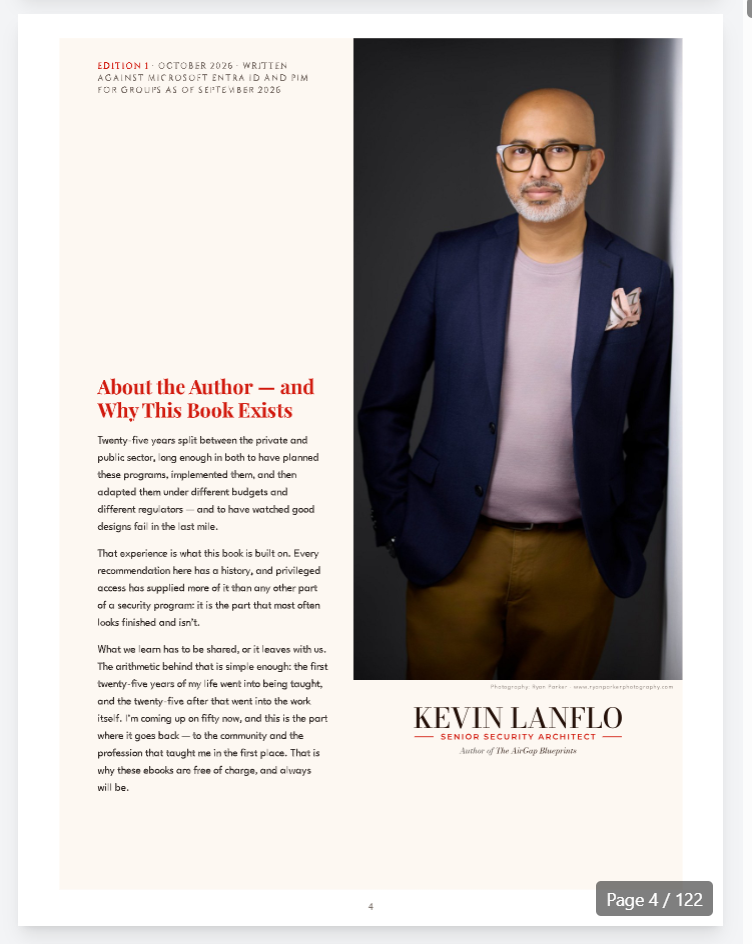
The About the Author page in Kevin’s book, The AirGap Blueprints.
His Substack profile.
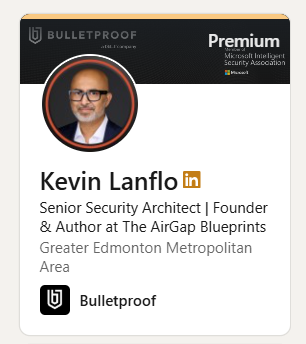
His LinkedIn profile.
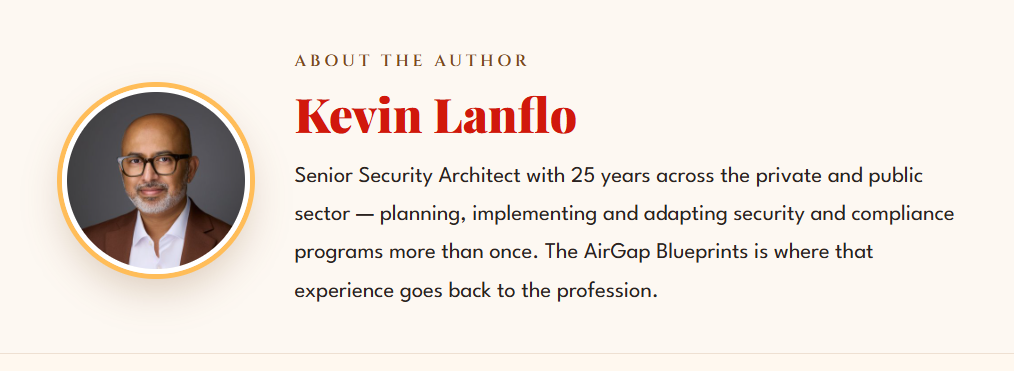
The author section on the book’s website.
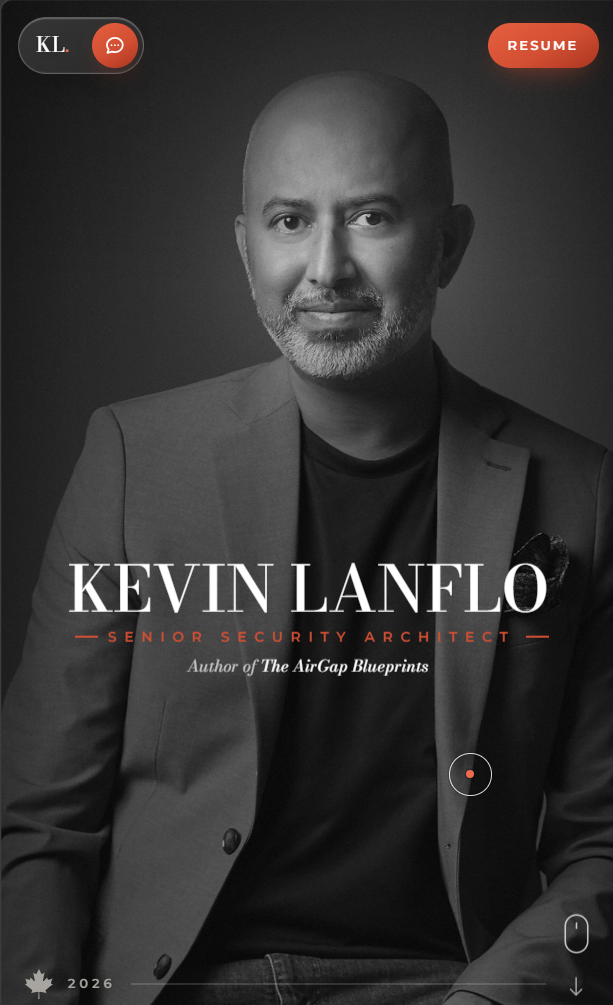
His own site, lanflo.ca, in black and white.
So a great LinkedIn headshot belongs to a set that carries through the website, the signature and the bio, and the person who found you on LinkedIn recognizes you in the room. Consistency lets a stranger do what only your friends can do without help: see one person across different pictures. In 2023, the same Australian team found that when people knew a run of photos were all of one person, their read of that person’s trustworthiness steadied. It matters even more for teams. When I photograph a company across its offices, Edmonton and Calgary and Toronto, the point is that a client looking at the staff page sees one firm.
Back to the photo you choose. How fast a stranger judges your face is settled: a tenth of a second, and more time only makes them surer. Which photo they’re judging is yours to decide, and that decision carries real weight. Make it before the session starts, by deciding what the photo needs to say. Then the right one is easy to spot, and it’s one you’ll use with confidence. Most people have more than one thing to say. When two photos are both true and say different things, keep both if you can, and send each one where it fits. That’s what the rest of the session is for: range, different looks for different places, every one of them recognizably you.
If you’re in Edmonton, come sit in my studio. If you’re somewhere else, tell me where you are and I’ll help you find a photographer near you.
Sources
- Janine Willis and Alexander Todorov, “First impressions: Making up your mind after a 100-ms exposure to a face”, Psychological Science 17(7), 592-598, 2006. Link
- Princeton University, “Snap judgments decide a face’s character, psychologist finds”, 2006. Link
- DataReportal (Kepios), “LinkedIn Users, Stats, Data & Trends”, updated November 5, 2026. Link
- Statistics Canada, The Daily, population estimate for July 1, 2026, released September 23, 2026. Link
- Ralf Caers and Vanessa Castelyns, “LinkedIn and Facebook in Belgium: The influences and biases of social network sites in recruitment and selection procedures”, Social Science Computer Review, 2011 (398 recruiters surveyed on LinkedIn, 353 on Facebook). Link
- T. M. Härtel, “(Don’t) take me at face value: Decoding personality signals in LinkedIn profile pictures”, Personality and Individual Differences 246, 113297, 2025 (381 LinkedIn users). Link
- LinkedIn Official Blog, “A Professional Photographer’s Guide to Getting the Right LinkedIn Profile Photo”, July 14, 2014. Link
- Anwesha Jalan, “LinkedIn Profile Photo Tips: Introducing Photo Filters and Editing”, LinkedIn Official Blog, March 14, 2017. The live address now redirects to LinkedIn’s blog front page; archived copy: Link
- LinkedIn Talent Solutions, “How to make your LinkedIn Recruiter profile stand out”, undated. Link
- Social Media Examiner, “LinkedIn Changes: What Marketers Need to Know”, January 2, 2017. Link
- Nicolas Roulin and Julia Levashina, “LinkedIn as a new selection method: Psychometric properties and assessment approach”, Personnel Psychology 72(2), 187-211, 2019. Link
- Lydia Abbot, “10 Tips for Taking a Professional LinkedIn Profile Photo”, LinkedIn Talent Blog, August 1, 2024 (first published 2014). Link
- LinkedIn Sales Solutions, “Upload a professional photo”, 2022. Link
- Nicole C. Krämer, Markus Feurstein, Jan P. Kluck, Yannic Meier, Marius Rother and Stephan Winter, “Beware of selfies: The impact of photo type on impression formation based on social networking profiles”, Frontiers in Psychology 8, 188, 2017 (297 participants). Link
- Alexander Todorov and Jenny Porter, “Misleading first impressions: Different for different facial images of the same person”, Psychological Science 25(7), 1404-1417, 2014. Link
- Taylor Gogan, Jennifer L. Beaudry and Julian Oldmeadow, “Within-person variability in first impressions from faces”, Perception 50(7), 595-614, 2021 (95 participants, 340 photos of 17 people; open preprint). Link
- Nikolaas Oosterhof and Alexander Todorov, “The functional basis of face evaluation”, PNAS 105(32), 11087-11092, 2008. Link
- Princeton University, “Whom do we fear or trust? Faces instantly guide us, scientists say”, 2008. Link
- Clare Sutherland, Julian Oldmeadow, Isabel Santos, John Towler, Michael Burt and Andrew Young, “Social inferences from faces: Ambient images generate a three-dimensional model”, Cognition 127(1), 105-118, 2013. Link
- Benedict C. Jones and colleagues (Psychological Science Accelerator), “To which world regions does the valence-dominance model of social perception apply?”, Nature Human Behaviour 5, 2021 (11,570 participants, 41 countries). Link
- Eva Krumhuber, Antony Manstead, Darren Cosker, Dave Marshall, Paul Rosin and Arvid Kappas, “Facial dynamics as indicators of trustworthiness and cooperative behavior”, Emotion 7(4), 730-735, 2007. Link
- Ze Wang, Huifang Mao, Yexin Jessica Li and Fan Liu, “Smile big or not? Effects of smile intensity on perceptions of warmth and competence”, Journal of Consumer Research 43(5), 787-805, 2017. Link
- Photofeeler, “New Research Study Breaks Down ‘The Perfect Profile Photo’”, May 13, 2014 (last updated January 9, 2023). Link
- Malia Mason, Elizabeth Tatkow and C. Neil Macrae, “The look of love: Gaze shifts and person perception”, Psychological Science 16(3), 236-239, 2005. Link
- DongWon Oh, Eldar Shafir and Alexander Todorov, “Economic status cues from clothes affect perceived competence from faces”, Nature Human Behaviour 4(3), 287-293, 2020. Princeton summary: Link
- Shlomo Hareli, Yaniv Hanoch, Shimon Elkabetz and Ursula Hess, “Dressed emotions: How attire and emotion expressions influence first impressions”, Journal of Nonverbal Behavior 49(2), 249-269, 2025. Link
- Stijn Baert, “Do They Find You on Facebook? Facebook Profile Picture and Hiring Chances”, IZA Discussion Paper 9584, 2015 (published as “Facebook profile picture appearance affects recruiters’ first hiring decisions”, New Media & Society 20(3), 1220-1239, 2018). Link
- Isamar Troncoso and Lan Luo, “Look the Part? The Role of Profile Pictures in Online Labor Markets”, Marketing Science 42(6), 1080-1100, 2023. Link
- Harvard Business School Working Knowledge, “When Glasses Land the Gig: Employers Still Choose Workers Who Look the Part” (on Troncoso and Luo 2023). Link
- Rob Jenkins, David White, Xandra Van Montfort and A. Mike Burton, “Variability in photos of the same face”, Cognition 121(3), 313-323, 2011. Link
- Taylor Gogan, Jennifer Beaudry and Julian Oldmeadow, “Knowledge of identity reduces variability in trait judgements across face images”, Quarterly Journal of Experimental Psychology 76(9), 2053-2067, 2023. Link