
In-Studio vs On-Location Team Headshots
Ryan ParkerI touched on this in How to Plan a Team Headshot Day and said it deserved its own post, so here it is. Pick the wrong one for your team and you either overpay for a formality nobody needed, or end up with photos that don't hold together as a set. The short version is that both options can produce great results. The longer version is that they trade off against each other in ways worth understanding before you book, not after.
Cost
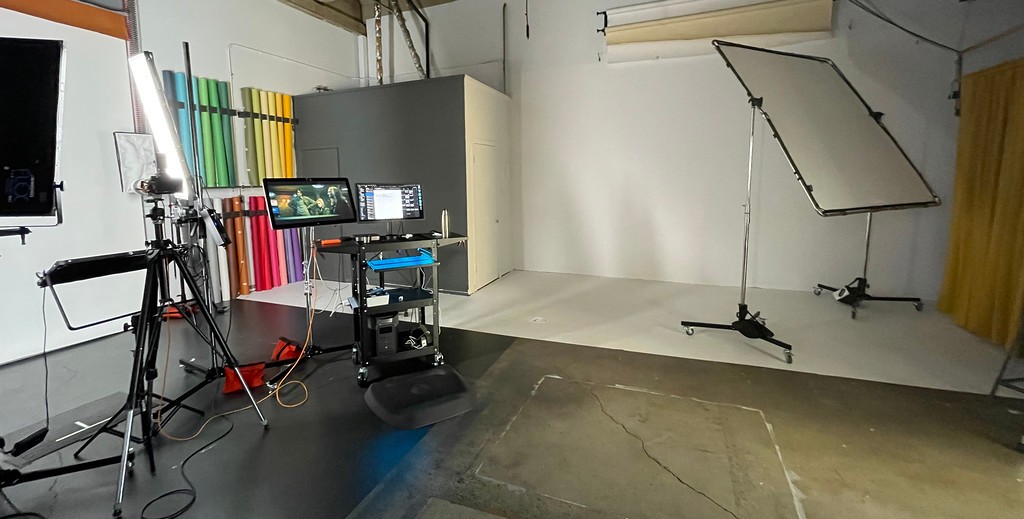
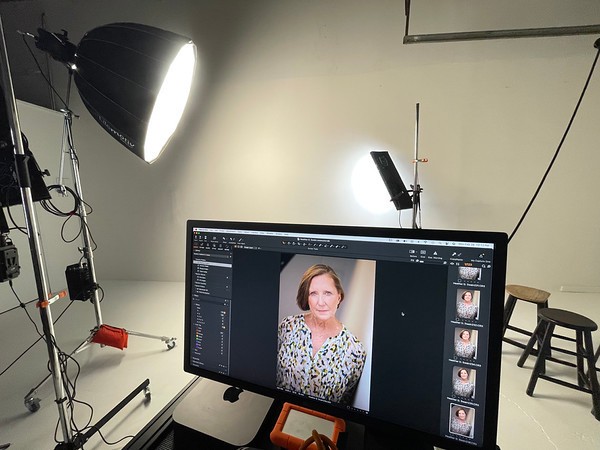
In-studio is typically the more cost-efficient option. There's no travel time, no packing and unpacking a full lighting setup, no loading in and out of a building the photographer has never seen before. That efficiency shows up directly in the price. On-location pricing has to account for the extra time and labour, even before a single photo gets taken. It's a big part of why smaller groups tend to lean toward in-studio: the travel and setup overhead gets spread across fewer people, so it has a bigger effect on the per-person cost.
Consistency
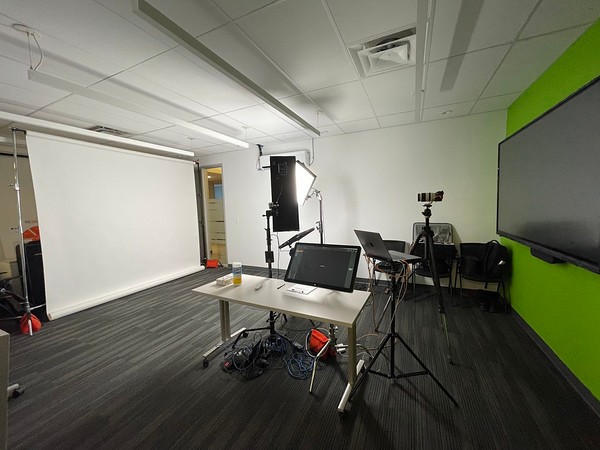
A controlled studio makes consistent lighting easier by default: same walls, same ceiling height, same everything, every time. But a skilled photographer should be able to deliver that same consistency on-location too. If you're evaluating photographers for an on-location shoot, it's worth asking directly rather than assuming: will the headshots you take at our office look consistent with the work on your website?
Space and Logistics
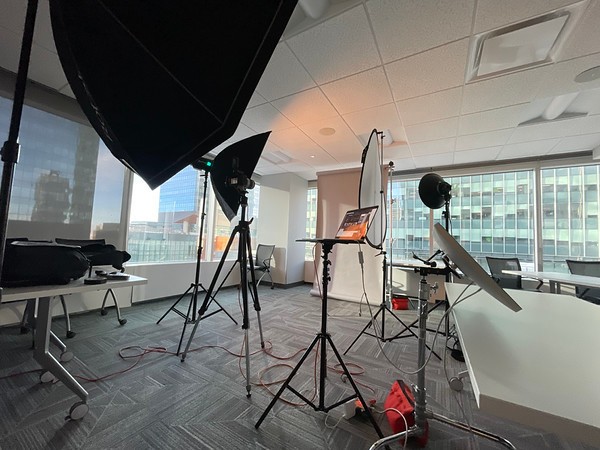
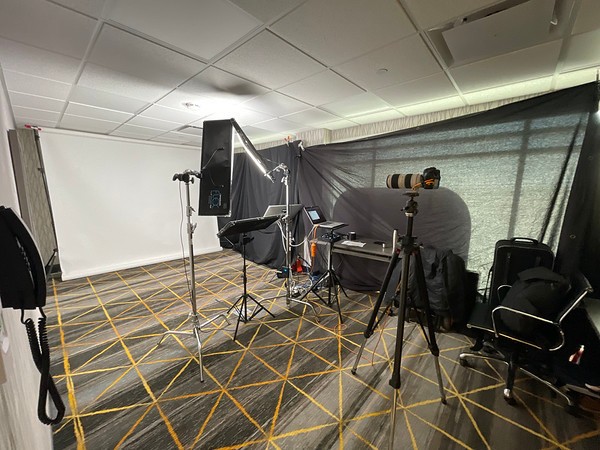
This is the one people underestimate. A studio is built for this. There's room to move, room for the light to spread out, room for people to wait comfortably between their turn. An office was built to be an office, so how well it accommodates a lighting setup varies a lot, from one workplace to the next, and from one photographer to the next.
I've set up in all kinds of borrowed spaces over the years. The smallest was a coat check room. It was a tight squeeze, but the images worked out well, and we all knew each other a little better by the end.
Given enough square footage, most rooms can work. But space isn't a non-issue, either. You need enough physical distance between camera and subject to avoid the kind of distortion a lens introduces when it's too close, and low ceilings can cause light to bounce in ways that are hard to control. A skilled photographer has ways around this: flagging the light to cut the bounce, or lowering the whole setup and seating people instead of standing them. A good photographer can troubleshoot most spaces to make them work, or will tell you honestly when a space won't. Either way, it's worth finding out before the day. A quick walkthrough, or even just a few wide-angle phone photos of where the setup might go, is usually enough for a photographer to tell you what to expect.
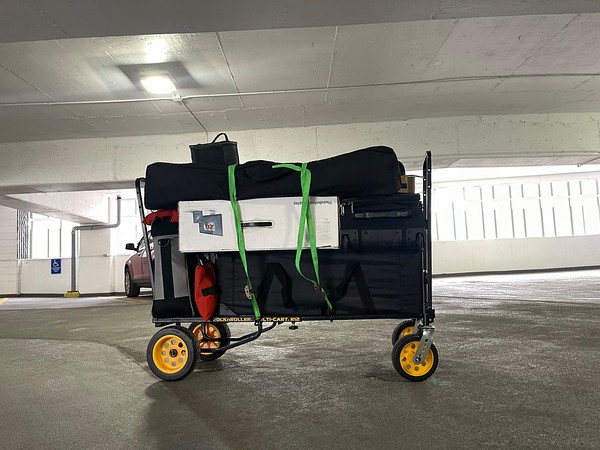
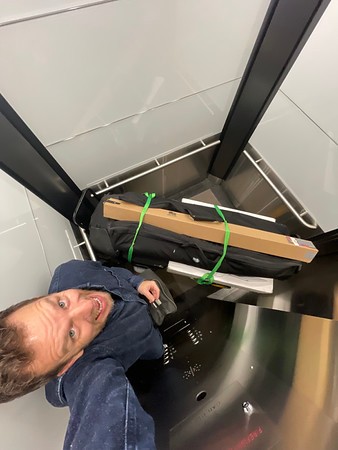
One more thing worth mentioning while you're at it: wheelchair accessibility. Most photographers travel with their gear on a rolling cart rather than carrying it piece by piece, and if a building isn't accessible, that gear has to get moved some other way. Depending on the space, that can mean bringing along an assistant just to handle logistics, which is worth flagging up front, since it's the kind of detail that can affect a quote if it's a surprise on the day rather than something planned for. A narrow freight elevator can create the exact same problem, minus the assistant. Sometimes it just comes down to a very tight squeeze and a bit of luck.
The Experience Itself
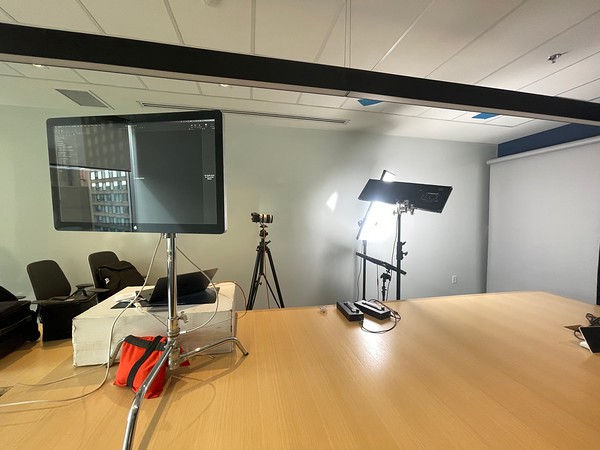
This one's more subjective, but it's worth naming. A studio session feels like a dedicated event. You show up, that's the thing you're doing, there's nothing else competing for your attention. On-location, a headshot session is squeezed into a workday that's still happening around it. People are stepping out of meetings, checking their phones between shots, mentally still halfway at their desk.
Even the commute plays a part. Driving to a studio gives you 5-10 minutes to actually leave the office behind before you walk in. Walking down the hall to the boardroom gives you 5-10 seconds. That's not much time to shift out of whatever headspace a meeting or an email chain just left you in, and it shows.
A good photographer can make a connection and dampen that noise in under 15 minutes, though: a minute of small talk, a chance to actually arrive before the camera comes up, rather than going straight from an inbox to a headshot. Give someone even sixty seconds to reset and most of that gap closes. Plenty of great, relaxed sessions happen in offices every week. A studio just does a bit of that work for you automatically, where on-location can take a little more intention to get to the same place, depending on the person.
So Which Is Right for You?
A few situations where each option tends to make more sense:
In-studio tends to be the better fit when:
- Budget efficiency matters
- Your team can travel without much disruption
- Your team works remote or hybrid, so people aren't reliably on-site anyway, and there's no "regular day" to shoot around
- Your office doesn't have an obvious space that could work
On-location tends to be the better fit when:
- Your team is large enough that traveling everyone is impractical
- You want environmental headshots that show off the workplace itself. This only happens on-site
- You want group shots in your lobby or somewhere else specific to your office
- Your office genuinely has the space to support it
If environmental/office headshots are what you're after, take a look at my office headshots portfolio for examples of what that looks like in practice.
If you're not sure which camp you fall into, it's a fair question to bring straight to a photographer. A good one will tell you honestly which option fits your situation, not just push whichever one is easier for them.
This Isn't a Permanent Choice
Whichever way you go this time, it doesn't lock you in. A team that's mostly remote today might be back in one office in two years. A company that shoots in-studio for its first round of headshots might need on-site environmental shots once the next brand refresh happens. The right call is really about what fits your team right now, not a standard you're stuck with going forward. A photographer who understands both options well can move between them as your situation changes, without the results looking like they came from two different processes.
Weighing studio vs. on-location for your team?
Get In Touch